
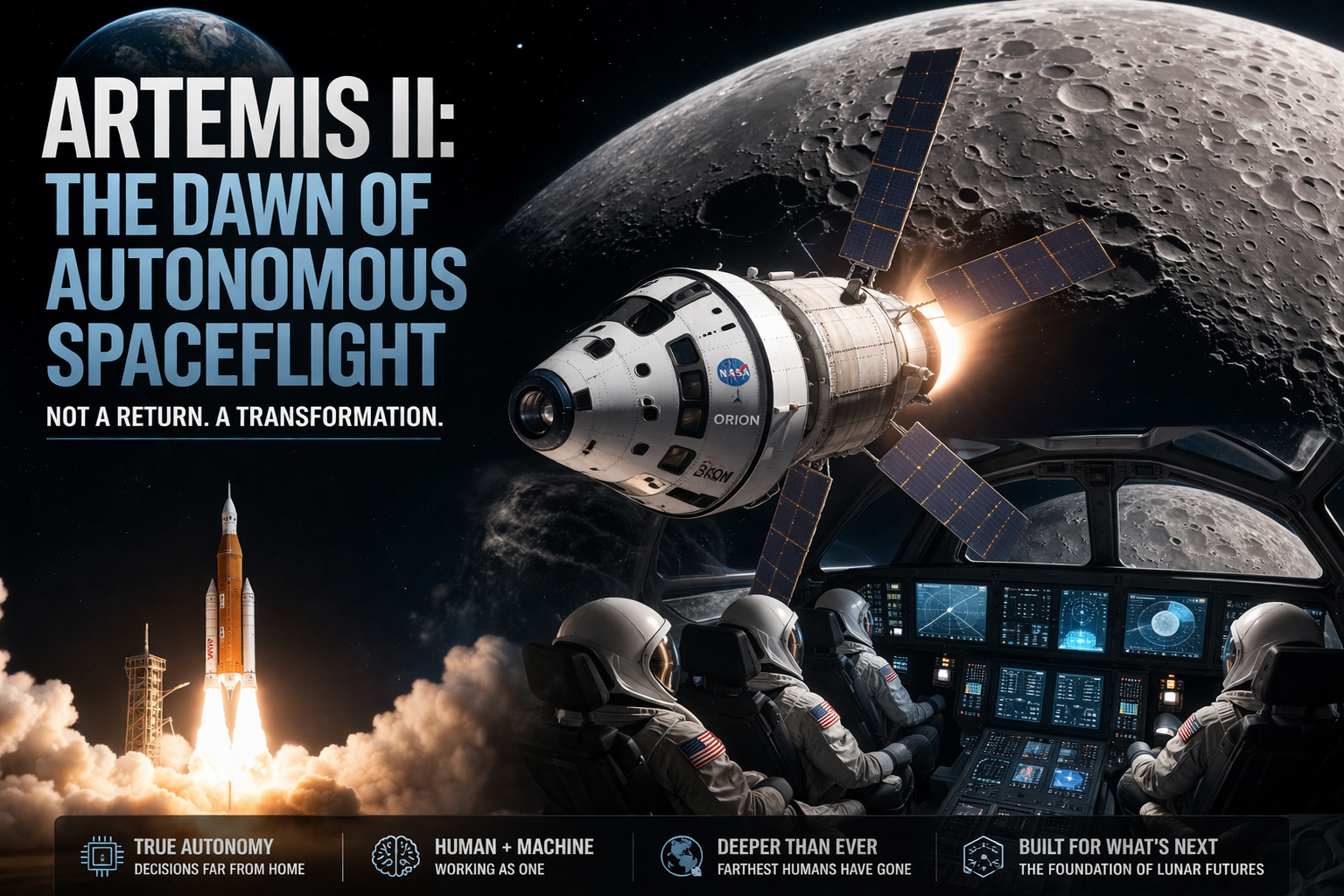
Introduction — A New Era Beyond Earth
For the first time in a generation, humanity sent astronauts beyond low Earth orbit — not simply to explore, but to fundamentally redefine how we operate in space.
The Artemis II mission marked a decisive shift. This was no longer about symbolic milestones or isolated missions. Instead, it signalled the beginning of a new phase — one defined by systems, infrastructure, and autonomy.
At its core, Artemis II was not just a crewed flight. It was a proving ground for technologies designed to enable spacecraft to think, adapt, and operate with increasing independence from Earth.
Spacecraft were no longer just vehicles — they became autonomous operators.
🧠 Operating with True Autonomy
One of the most defining characteristics of Artemis II was not the distance travelled — but the level of independence required to survive it.
Unlike missions in low Earth orbit, where ground control can intervene almost instantly, Artemis II introduced operational delay and isolation.
The crew aboard Orion had to:
- Diagnose system failures independently
- Manage competing onboard priorities
- Execute critical decisions without immediate input from Earth
This marks a fundamental shift:
👉 Humans are no longer being “guided” through missions — they are becoming part of an autonomous system themselves.
Space Autonomy here is not just software — it is:
- Human-machine integration
- Decision-making architecture
- Distributed control between Earth and spacecraft
⚙️ The Orion Powerhouse — European Service Module (ESM)
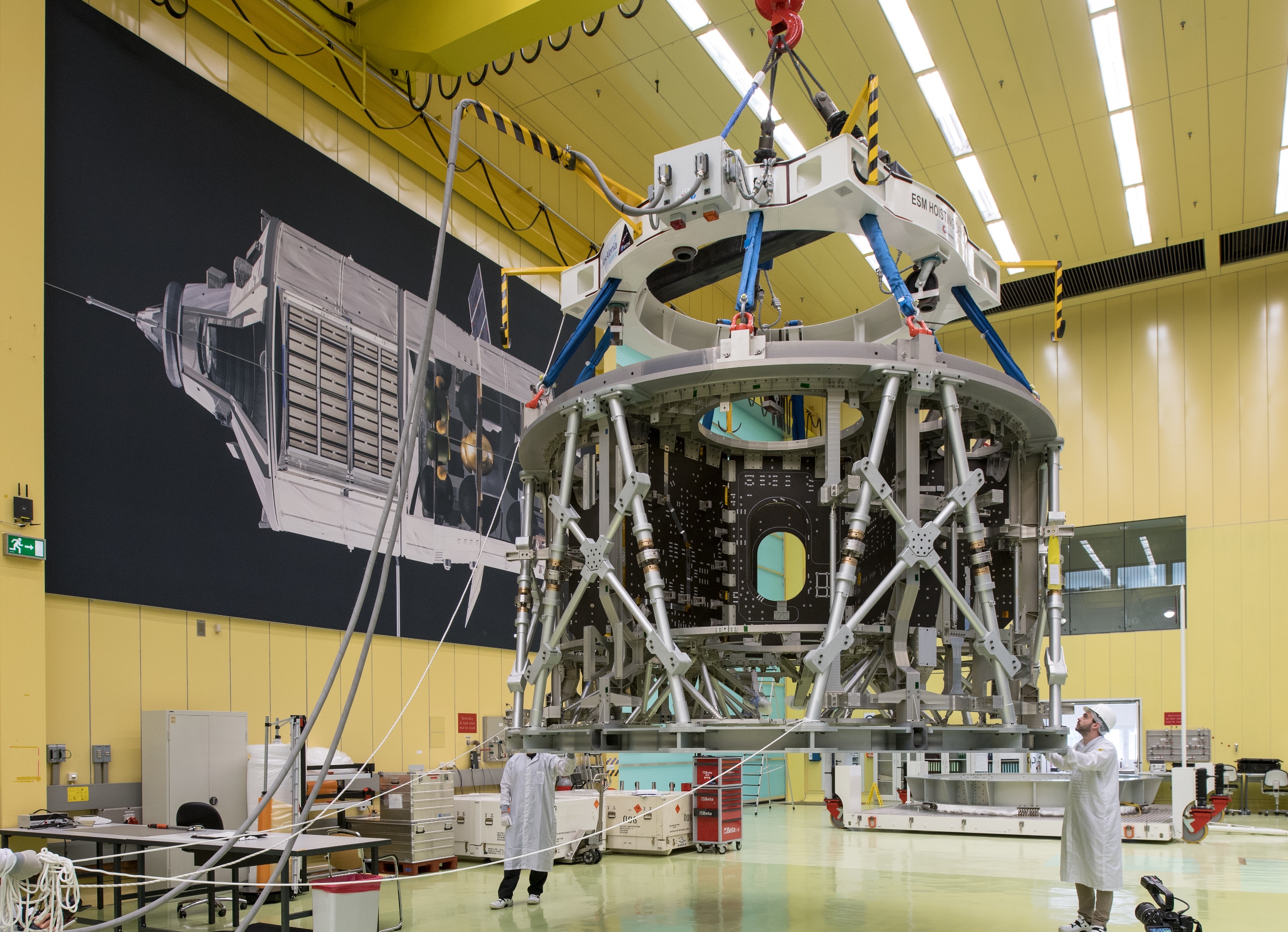
At the core of Orion’s autonomous capability sits the European Service Module — built by European Space Agency and manufactured by Airbus.
This module is not just a support system — it is the functional backbone of autonomy.
🔧 Engine Architecture — Precision Through Redundancy
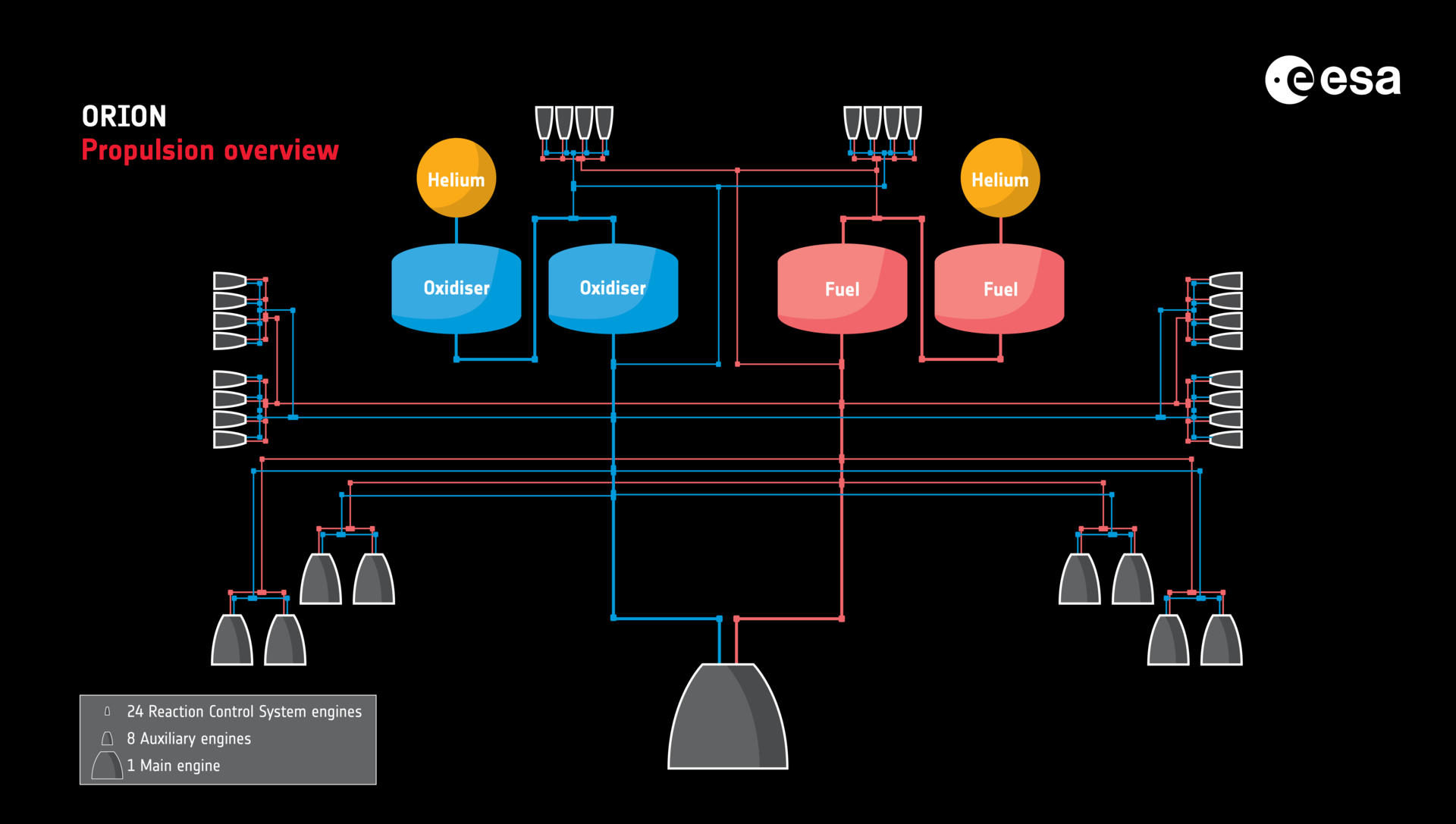
The ESM integrates 33 engines, each with a distinct role:
- 1 × Main Engine
- Repurposed Space Shuttle orbital manoeuvring system engine
- Provides major velocity changes (e.g. trans-lunar injection)
- 8 × Auxiliary Engines
- Orbital corrections
- Backup propulsion redundancy
- 24 × Reaction Control Thrusters
- Fine orientation and positioning
- Enables precise manoeuvres and stabilisation
This layered system enables something critical:
👉 Autonomous fault tolerance
If one system fails, another compensates — without requiring immediate human intervention.
🌌 Mission Execution — Autonomy in Motion
Day 1: Autonomous Validation in Earth Orbit
After launch, Orion remained in Earth orbit while systems were verified.
The crew then:
- Took manual control
- Used reaction control thrusters
- Practised proximity operations (future docking scenarios)
👉 This was a hybrid test:
Human input + autonomous stabilisation systems working together
Day 2: Trans-Lunar Injection — The Point of No Return
The mission’s most critical moment came when the ESM’s main engine ignited to perform the trans-lunar injection burn.
This manoeuvre:
- Accelerated Orion out of Earth orbit
- Locked in a multi-day trajectory toward the Moon
From this point forward:
👉 Autonomy becomes non-negotiable
Trajectory corrections, navigation, and system management rely heavily on onboard systems.
❤️ The ‘Heart and Lungs’ — Life Support as Autonomous Infrastructure
The ESM is not just propulsion — it is survival.
Key Systems:
- Oxygen Supply: ~90 kg onboard
- Water Supply: ~240 kg for crew use
- Thermal Control: Regulates extreme temperature swings
- Power Generation: ~11.2 kW via solar arrays
These systems operate with minimal manual input.
👉 This is critical:
Life support is no longer manually managed — it is autonomously regulated.
Failure response, resource balancing, and environmental control are handled through integrated onboard systems.
📡 Laser Communications — Autonomous Data Flow
Artemis II introduced the Orion Optical Communications System (O2O) — a major leap forward in deep space communication.
Capabilities:
- Data transmission up to 260 Mbps
- Near real-time 4K video streaming
- Laser-based, not traditional radio
This changes everything.
👉 Spacecraft are no longer passive transmitters — they are:
- Prioritising data
- Managing bandwidth
- Operating within delay-tolerant networks
This is communication autonomy.
🛰️ The Invisible Layer — Satellites and Networked Autonomy
Although Orion operates independently, it is not alone.
Artemis II relies on a broader space architecture:
1. Deep Space Network (DSN)
- Global ground-based antenna system
- Enables long-distance communication
- Supports autonomous navigation verification
2. Relay and Tracking Systems
- Enable positioning and telemetry
- Provide redundancy in communication pathways
3. Future Integration
Artemis missions are paving the way for:
- Lunar orbit relay satellites
- Autonomous navigation networks around the Moon
- Persistent communication infrastructure
👉 This is where Space Autonomy scales:
From spacecraft → to networks → to ecosystems
🏗️ Build & International Collaboration — A Distributed System
Artemis II is not a single-nation mission — it is a globally distributed autonomous system.
Key Players:
- NASA — mission leadership, Orion crew module
- European Space Agency — European Service Module
- Airbus — ESM manufacturing (Bremen, Germany)
Why This Matters for Autonomy:
The mission itself reflects autonomous principles:
- Distributed manufacturing
- Modular system integration
- Cross-agency interoperability
👉 The system is designed to function even when components are built across continents
🌕 Trajectory & Distance — Pushing Human Limits
Artemis II’s trajectory took Orion between:
- 6,400 km and 9,000 km above the Moon’s surface
At its farthest point, the crew reached:
👉 The greatest distance from Earth ever achieved by humans
This introduces a key autonomy challenge:
- Increased communication delay
- Reduced real-time intervention
- Greater reliance on onboard systems
🔮 What Comes Next — Scaling Space Autonomy
Artemis II was not the destination — it was the validation phase.
Upcoming Evolution:
- ESM-3 (2027): Rendezvous and docking autonomy
- ESM-4 (2028): Supporting lunar landing missions
- Ongoing production (ESM-5 & 6) ensures continuity
This leads to:
- Autonomous docking systems
- AI-assisted navigation
- Robotic lunar operations
⚔️ The Strategic Reality — Autonomy as Power
Space autonomy is no longer theoretical — it is strategic.
Nations that master autonomy will control:
- Lunar logistics
- Orbital infrastructure
- Deep space operations
Artemis II demonstrated that:
👉 Access to space is no longer enough — independence in space is what matters
✍️ Conclusion — The First Step Toward Autonomous Humanity
Artemis II was not about where humanity went.
It was about how humanity operated once it got there.
For the first time:
- Humans travelled beyond Earth
- While relying on systems designed to operate without constant human control
This is the defining shift of our time:
The future of space will not be human-led or machine-led — it will be autonomous.
And Artemis II was where that future began.
S11