
By SpaceAutonomy.ai
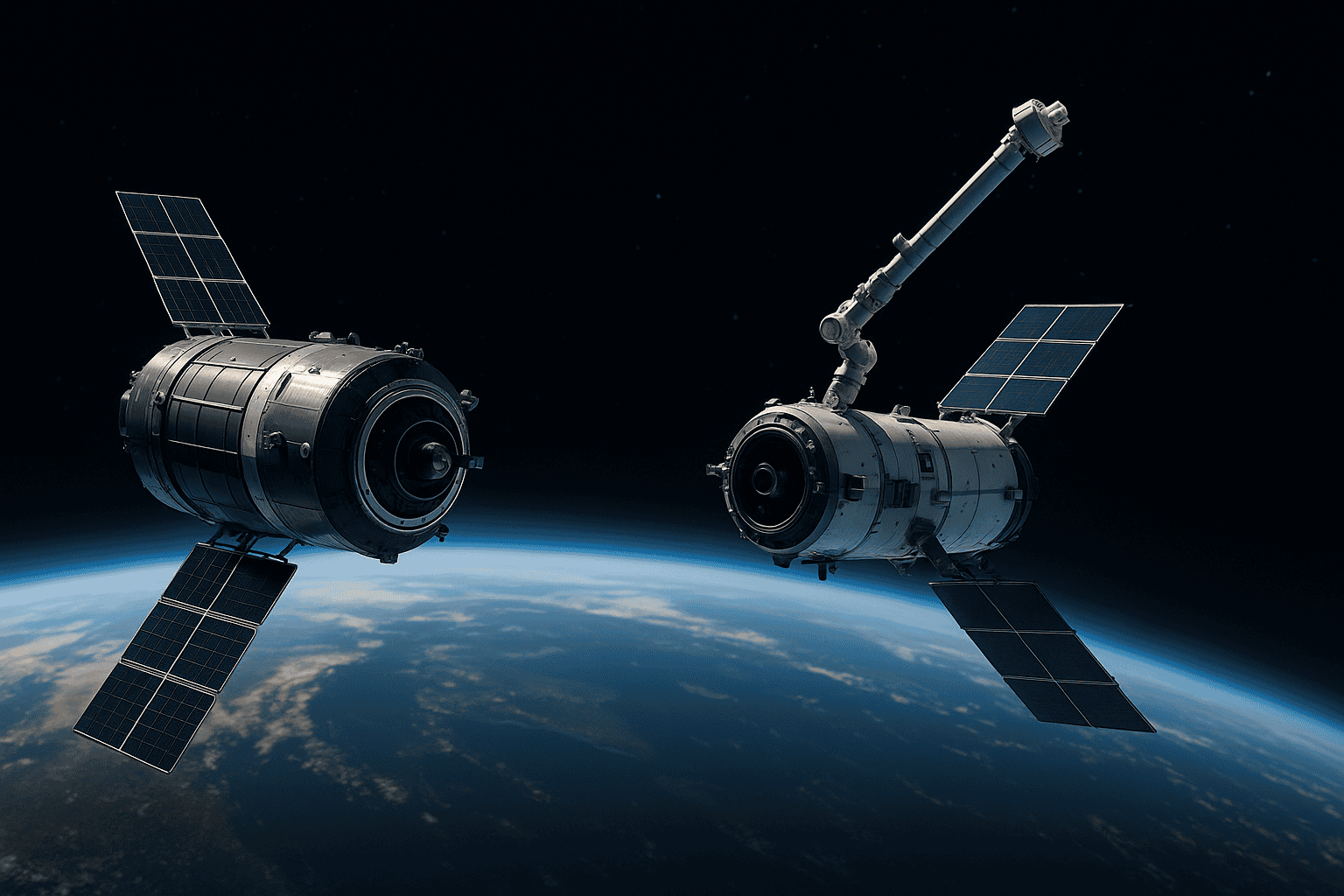
In the not-so-distant past, when a satellite failed, it became just another piece of space junk—silent, drifting, and doomed. But a Lithuanian aerospace company, Blackswan Space, is rewriting that script. They’re not just building satellites. They’re engineering autonomous, self-repairing, AI-enhanced space systems that can extend the life of satellites, refuel them, and avoid collisions—all without human intervention.
Welcome to the new frontier of space autonomy, where spacecraft manage themselves, missions run on synthetic data, and Earth-bound operators become observers, not micromanagers.
🌌 From Orbit to Obsolescence—Unless Autonomy Steps In
Today, more than 3,000 dead satellites orbit Earth. By 2030, that number could balloon to 60,000–100,000, driven by constellations from SpaceX, Amazon, OneWeb, and others. The risks are clear: congestion, collision, and chaos in orbit.
Until recently, there was no effective way to refuel, upgrade, or even move these satellites once they were launched. They were, by design, expendable. But Blackswan Space is changing that—by giving satellites the power to self-navigate, self-diagnose, and even self-service.
🤖 Engineering True Autonomy: No Ground Control Required
Founded in 2019 by Marius Klimavičius, Blackswan Space blends robotics, AI, and physics-based simulation to enable satellites to function with minimal ground support. Their technology stack addresses everything from navigation and collision avoidance to mission planning and satellite refueling.
Their core product? A mission design simulator that creates digital twins of satellites before launch—allowing operators to simulate operations, identify risks, and test autonomy scenarios in a hyper-realistic virtual space environment.
This approach:
- Cuts mission planning time by up to 50%
- Enables visual, 3D modeling of complex maneuvers
- Produces synthetic data to train AI systems
- Lets satellites adapt to changing conditions in real time
This isn’t just a step toward autonomy. It’s a leap toward operational independence in orbit.
👁️ Vision-Based Navigation: Eyes and Brains for Spacecraft
One of the company’s most compelling technologies is its vision-based navigation system. Using sensors and AI-powered algorithms, satellites can detect and track other objects in space—including fellow spacecraft, debris, or mission targets.
Tested under real-world lighting conditions (sun glare, shadows, contrast), the system enables satellites to:
- Navigate safely in crowded constellations
- Approach and dock with legacy satellites for servicing
- Avoid collisions—automatically
And crucially, it does this without constant contact with Earth. That’s key for future missions to the Moon, Mars, and deep space, where signal lag makes remote piloting impractical.
🚀 Real-World Backing, Real-World Progress
Blackswan Space isn’t just running simulations. They’re building, funding, and preparing to launch.
- Selected by Luxembourg’s Fit 4 Start accelerator in 2021
- Backed by Eurostars and the European Space Agency
- Signed 3 ESA contracts for space robotics testing
- Secured €760,000 pre-seed funding in 2024
- Demo missions planned for 2027–2028, including servicing legacy satellites
Their plan? To eventually deploy autonomous satellites that can refuel, repair, relocate, and even repurpose dead satellites—potentially turning some space junk back into functioning assets.
In short: Blackswan isn’t just predicting the autonomous future. They’re coding and launching it.
🧠 Our Take at SpaceAutonomy.ai
This story represents more than just a startup’s success. It reflects a global pivot in how we think about infrastructure in orbit.
We’re moving from:
- 🚧 Disposable satellites ➜ to self-sustaining orbital platforms
- 🧠 Manual mission ops ➜ to AI-driven autonomy and simulations
- 📡 Reactive control ➜ to proactive, decentralized space management
As global interest in cislunar space, orbital mining, and defense platforms increases, the ability to service, repair, and reposition assets in space will become a strategic advantage—militarily, economically, and environmentally.
Blackswan Space is one of the few companies taking that challenge head-on.
📣 Stay Ahead with SpaceAutonomy.ai
We’re tracking the rise of autonomous infrastructure in orbit, and what it means for the future of defense, exploration, and commercial space.
✅ Follow the tech that fuels independence beyond Earth
🚀 Subscribe to SpaceAutonomy.ai for cutting-edge reporting
📡 Follow us on X @Space_Autonomy and Instagram @SpaceAutonomy
Because the future of space won’t be built by remote control.
It will be built by machines that think for themselves.
S11